Best Food Tour Ubud: Discover Authentic Balinese Flavors at Local Warungs
Explore Ubud's finest local warungs on a guided food tour. From Babi Guling to Nasi Campur, discover authentic Balinese flavors that most tourists miss.
The Experience
There is something truly magical about eating in Ubud. The air smells of frangipani and incense, the clatter of cooking echoes from open doorways, and every corner seems to hold a plate of something you have never tasted before. But the real heart of Balinese food is not found in the polished restaurants along Monkey Forest Road. It hides in the warungs, the humble family-run eateries where recipes pass down through generations and the day's menu depends on whatever was fresh at the market that morning.
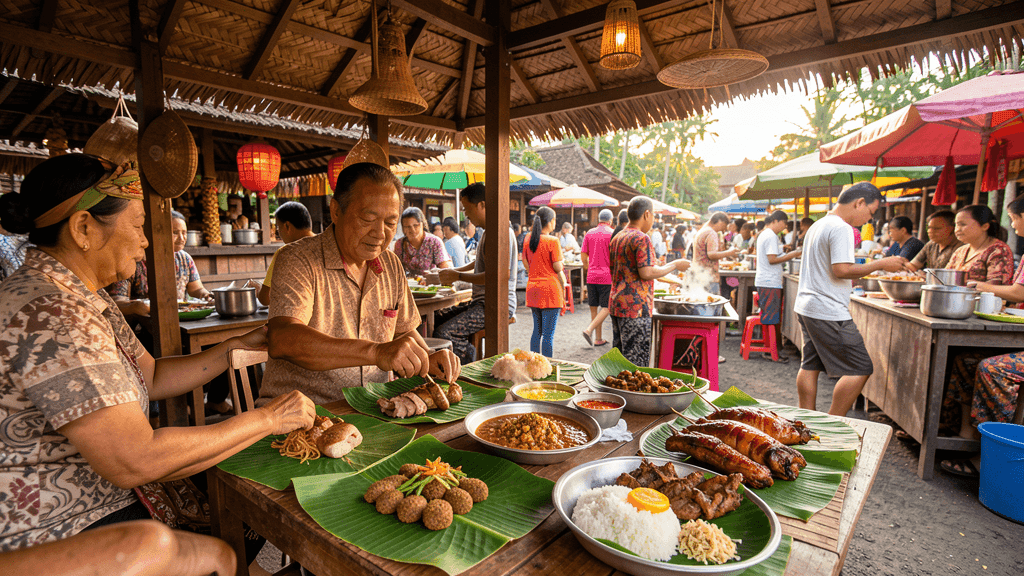
If you want the best food tour Ubud has to offer, you need to leave the tourist strip behind and follow the scent of frying shallots and burning coconut husks into the neighborhoods where locals actually eat. This is exactly what a proper Ubud food tour does. It takes you into the labyrinth of small lanes south of the market, past temples and family compounds, until you reach a warung that has no sign, just a wooden bench, a few plastic stools, and a grandmother stirring a giant pot of lawar.
Let me take you through the warungs that make this experience unforgettable.
Warung Babi Guling Ibu Oka is the most famous name in Balinese roast pork, and for good reason. The original location near the Ubud Palace still draws crowds at lunchtime, but the real secret is to visit the satellite warung on Jalan Tegal Sari where the queue is shorter and the crackling stays crisp. Babi guling is a ceremonial dish that takes an entire day to prepare. The pig is stuffed with a spice paste of turmeric, coriander, lemongrass, galangal, and chilies, then roasted over an open fire until the skin shatters like glass. Served with lawar, a hash of grated coconut, minced meat, and herbs, this is the dish you will dream about long after you leave Bali.
A few minutes down the road, Warung Sopa offers the perfect counterpoint for anyone who needs a break from meat. This family-run warung serves incredible vegan and vegetarian versions of Balinese classics. Their nasi campur with tempeh manis, jackfruit curry, and sambal matah is a revelation. The sambal matah alone, a raw shallot and lemongrass salsa with bird's eye chili and a squeeze of lime, is worth the trip. I have watched travelers buy jars of it to take home, only to finish them before the airport.
For the most authentic nasi campur in Ubud, you cannot skip Warung Makan Bu Rus. Tucked away on a side street near the market, this no-frills warung serves what many locals consider the best weekday lunch in town. You point at what you want through the glass counter, and within seconds a plate arrives piled with sate lilit, spicy fried tempeh, long beans in coconut milk, and a mountain of steamed rice. The sate lilit here is exceptional, minced fish or chicken wrapped around lemongrass stalks and grilled over charcoal, infused with palm sugar and kaffir lime.
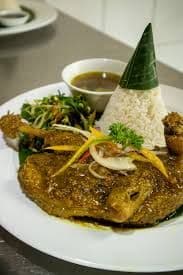
Another essential stop is Warung Mak Beng, famous for its single dish done perfectly. Ikan goreng, a whole deep-fried fish, served with a bowl of rich, turmeric-yellow fish soup, rice, and sambal. There is no menu, no decisions, just fish and soup and happiness. The warung sits a little outside the main Ubud area, making it a favorite stop on longer food tours that explore the surrounding rice field villages.
A great food tour experience weaves all these stops together with walking and storytelling. You start in the morning when the Ubud Market is at its most chaotic, weaving past baskets of purple rice, snake fruit, and aromatic turmeric. Your guide explains the ingredients that define Balinese cooking, the base genep, the spice paste that underpins nearly every dish, the different varieties of sambal, and the importance of palm sugar in balancing heat and salt. Along the way you stop at a family compound to see how lawar is prepared with fresh coconut and spices, a tradition that connects Balinese cuisine to its Hindu roots.
Midday you move into the warungs, eating in a specific order so that flavors build rather than clash. First a light lawar and sate lilit to wake up the palate, then a hearty plate of nasi campur, and finally the heavy hitter of babi guling when you still have room to appreciate the crackling properly. Between meals there are pauses for es campur, a shaved ice dessert drenched in coconut milk and palm sugar syrup, and tiny cups of kopi Bali, the strong gritty coffee that cuts through the richness of the pork.
The beauty of a guided food tour in Ubud is the access. You cannot just wander into a family warung and expect to understand what you are eating. The guide translates not just language but context, explaining why certain dishes are reserved for ceremonies, why the order of eating matters, and how the Hindu concept of tri hita karana influences the way food is prepared and shared. By the end of the tour, you are not just full. You understand Balinese culture through its most essential expression.
For anyone planning a trip to Bali, the best food tour Ubud can offer is one that respects the food and the people behind it. It is not about eating the most expensive meal. It is about eating the most honest one, the plate of lawar made by hands that have been making it for fifty years, the sambal ground in a mortar that has been passed down through three generations, the simple pleasure of rice and sambal eaten on a plastic stool while a rooster crows from the family compound next door.
That is the Ubud food tour worth taking. That is the Bali you will remember.